It seems like there's a healthy amount of Foley instruments for Kontakt nowadays. Here in the Pandora Machine we tend to use some instruments, some real Foley (making some sounds in front of a microphone), cut effects either from libraries or field recordings, and the ol' trusty -- actual production sound.
The Foley Collection is a fairly big set albeit with a lot of misspellings. It's 600 Euros.
The Edward Suite by Tovusound is $400, but there's a "light" version which is $79.
Big Fish Audio makes their Virtual Foley Artist available for the weird price of $226.24
I'm sure I'm re-inventing the wheel here, but I need to make a template for the ADR scripts. We know that on our movie Oblivion, we have four characters who need ADR for every scene they did out-of-doors.
So my first question is whether this is a spreadsheet or a "document." I'm going ahead with spreadsheet even though those inevitably cause formatting issues. I can't find any real and usable templates on the interwebs (there are a couple, but they didn't do anything for me) so I'm going to make one from scratch.
No, that's not it.
The other thing is that I'm planning on doing the actual ADR in Premiere rather than in Samplitude. Premiere's audio handling is less elegant than Samplitude's though. But we'll see if we can muddle through it.
One thing I'm planning is to have two mics on each actor for ADR. Or at least our lead. Hmm... Anyway, a small-diaphragm condenser in the sort of boom-mic position, and a large-diaphragm mic in, well, the same position (above the head). The reason I'm going for both these apostasies is that
I believe that microphones should nominally mic people who talk or sing from above because that placement avoids "p" pops and breath hits and
Some of the ADR will actually turn into voiceover and the large-diaphragm would be better suited to VO.
And since I'm gradually going further and further off-topic I think we should discuss the elephant in the room:
That is, why don't use a wireless lav for ADR? Because after all, that's what you'd use in the field if you were recording production dialog. After many years of cogitating over this (taking time out for meals of course) I have come to an answer: I don't know.
Detonation Films has some dust storms. I'm still trying to get some good sand coming up off of dunes that are far away. Lots of detail. Keyed. Still looking.
There is some limited auto-align functionality in Premiere Pro. This is relevant to my interests as I have a bunch of ADR I have to do for the Oblivion movie we shot way too long ago.
I have three movies in post-production right now. I used to be able to finish movies so much faster. No more.
The back of the jumpsuit for the character "Boots."
It turns out that creating Closed Captions is not that hard in Premiere. I mean, it's a pain because you have to make them, but it can totally be done.
That's a big ol' shoutout to Brian Schiavo for turning me onto that.
I may blog on "Making Movies the Pandora Machine Way".
Here are YouTube best practices. Basically "make it short."
Of course, you already know that. Not that. That. That.
You like random notes about things on the Internet? Here's one:
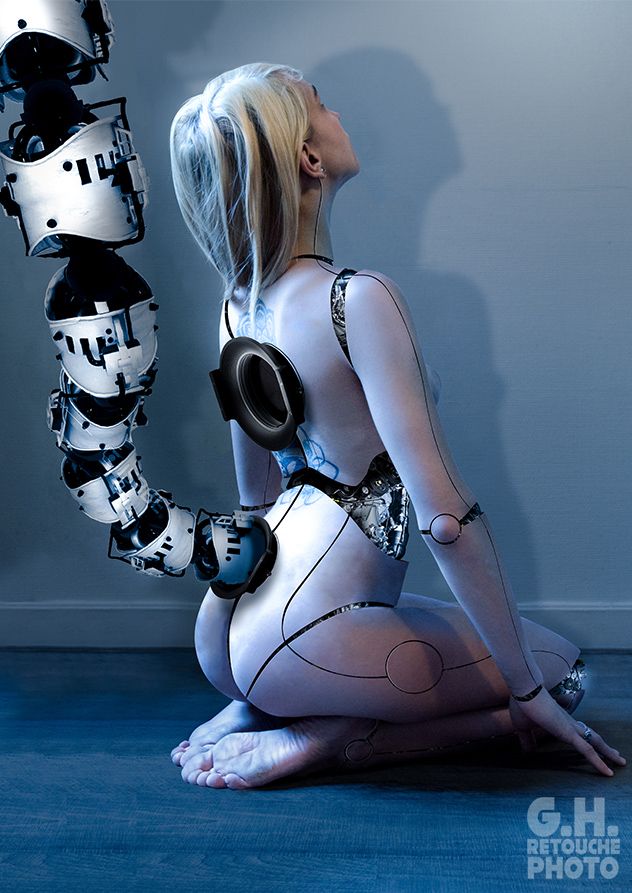
One big decision implied by the new scenes is that the world Vicky
describes to Barbara, as she's lying paralyzed, is real. There are
drones, and Central Command, the resistance, the Terran Defense Force,
the AI, and a new kind of android body. The new scenes all fit in the
first half of the current edit, so that the pacing and flow of the
second half through the ending are not affected.
Here's the first episode of The Pandora Machine Handbook -- Making Movies the Pandora Machine Way. It's on finishing, and why you should finish even if you're frustrated.




 Posts


